Reducto processes documents accurately, but production pipelines need more than extraction APIs. Teams hit constraints when needing multiple performance modes for different workloads, schema versioning to evolve extraction logic safely, or human-in-the-loop review for edge cases models miss. This breakdown of Reducto's features and pricing walks through what the service offers and which alternatives deliver the full document processing infrastructure that engineering teams building at scale actually need.
TLDR:
- Reducto converts unstructured documents to structured data using OCR and VLMs for extraction
- Reducto lacks schema versioning, evaluation tools, and human review UI needed for production
- Extend delivers 99%+ accuracy in minutes with agentic optimization and multiple performance modes
- Teams need workflow orchestration and quality control infrastructure beyond parsing APIs
- Extend is the complete document processing toolkit with parsing, extraction, and splitting APIs to ship hardest use cases in minutes
What is Reducto and How Does It Work?
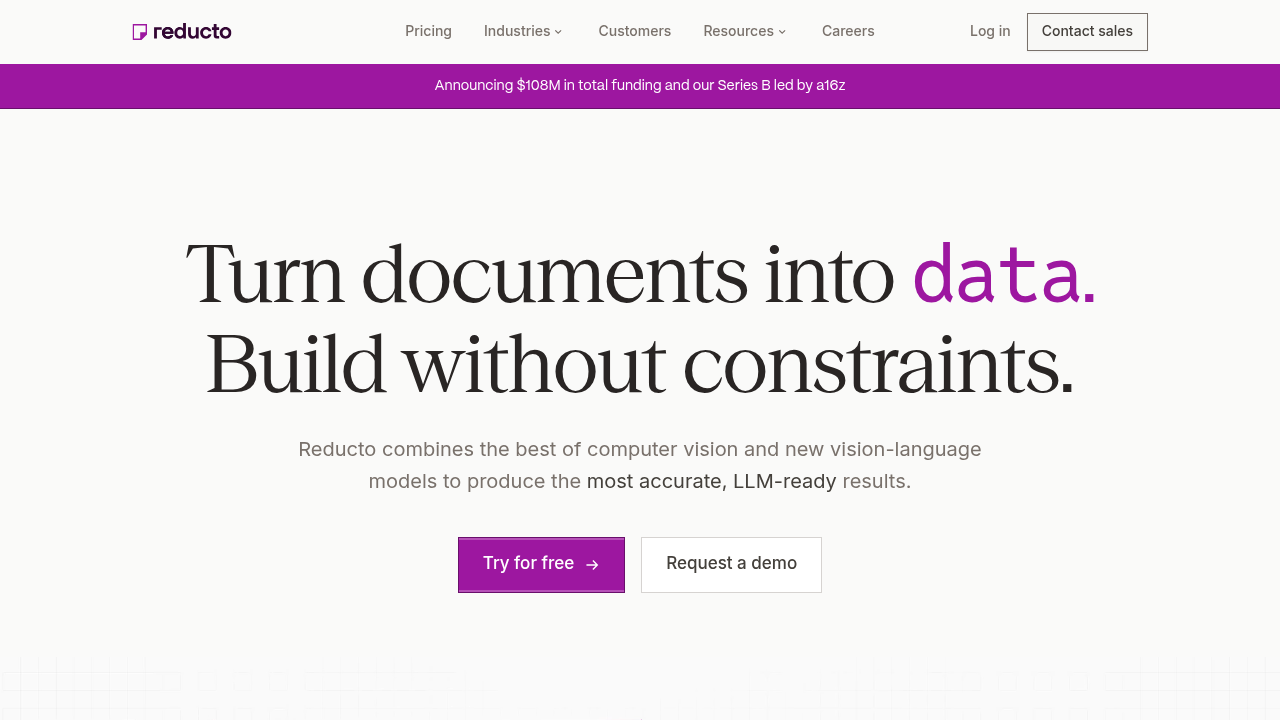
Reducto is an AI-powered document parsing service that converts unstructured documents into structured data. The service targets technical teams across organizations of varying sizes, from early-stage startups to Fortune 10 enterprises that need to extract information from complex documents at scale.
The system uses a multi-pass processing approach that combines OCR with VLMs. This architecture allows Reducto to capture text content, document layout, structure, and contextual meaning. The vision models analyze visual elements like tables, forms, and spatial relationships between content blocks, while OCR handles text extraction.
Reducto's API outputs structured data designed for downstream applications like retrieval-augmented generation pipelines and process automation workflows. The service processes various document types including PDFs, scanned images, and forms with tables or mixed layouts.
The technical approach focuses on handling documents where layout and structure matter as much as raw text extraction. Teams rely on Reducto when they need to move beyond basic OCR, gaining understanding of document semantics, spatial relationships, and complex formatting that simpler extraction tools miss.
Why Consider Reducto Alternatives?
Reducto delivers strong parsing accuracy and has processed over a billion pages for leading enterprises. Teams value its vision-based approach and ability to handle complex document layouts. For many use cases, particularly those focused primarily on document parsing, Reducto provides a capable solution.
Organizations with mission-critical document workflows often require infrastructure beyond parsing APIs, including intelligent document processing tools. Reducto offers a single processing mode across parsing, extraction, and splitting regardless of whether teams need low-latency real-time processing or cost-optimized batch operations. The service lacks native schema versioning, making production schema changes risky. There are no built-in evaluation tools to benchmark accuracy against ground truth datasets or track performance over time.
Teams building production document pipelines typically need human-in-the-loop review systems, workflow orchestration to chain processing steps, and automated optimization to improve accuracy without manual tuning. When document workflows demand multiple performance tiers, integrated quality assurance, continuous improvement loops, or end-to-end processing infrastructure rather than a standalone extraction API, alternative solutions designed for complete document workflows become necessary.
Best Reducto Alternatives in March 2026
Extend (Best Overall Alternative)
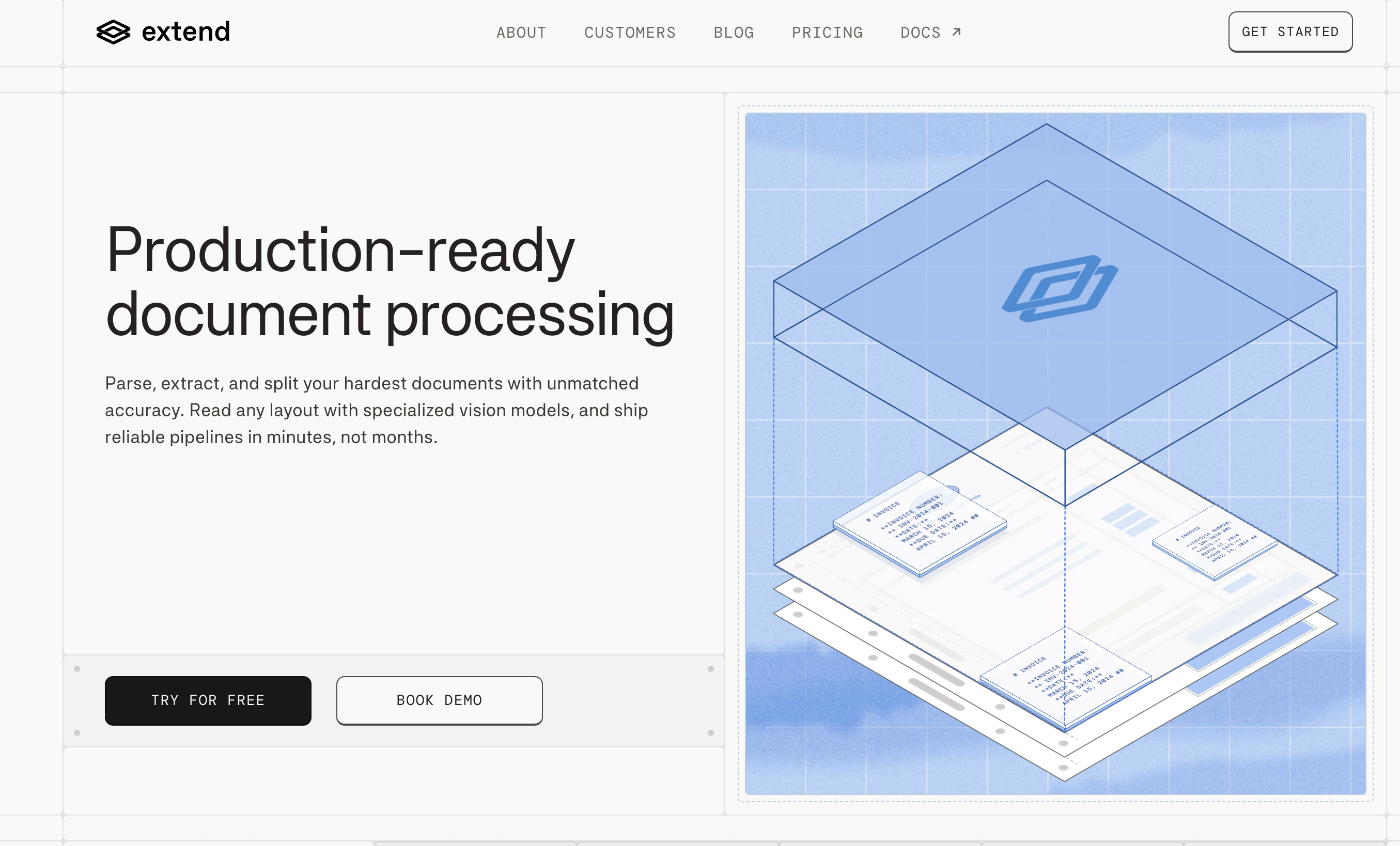
Extend is the complete document processing toolkit comprised of the most accurate parsing, extraction, and splitting APIs to ship hardest use cases in minutes, not months. Extend's suite of models, infrastructure, and tooling is the most powerful custom document solution, without any of the overhead. Agents automate the entire lifecycle of document processing, allowing engineering teams to process complex documents and optimize performance at scale.
Key strengths include multiple performance modes (fast parsing, extraction, and splitting for latency-sensitive use cases; cost-optimized modes for high-volume workloads), agentic automation with their Composer agent that automatically optimizes schemas achieving 99%+ accuracy in minutes, a full evaluation framework with accuracy reports and continuous improvement loops, and human-in-the-loop review UI integrated with validation and correction workflows.
Extend also offers their Edit API, a form filling solution that completes the document workflow loop. The Edit API fills any form programmatically using hybrid object detection models with vision-language models, supporting both template-based filling for known forms and instruction-based filling for dynamic forms. This gives Extend a unique advantage over competitors who only handle extraction, enabling true end-to-end document automation where data flows in through extraction and out through Edit. While Reducto has an Edit API too, Extend's performs better on real-world use-cases.
A standout capability exclusive to Extend is their Review Agent, an agentic scoring system that no other alternative offers. The Review Agent takes a critical second pass over every extraction, analyzing whether values correctly answer schema intent, identifying ambiguity where multiple document values could match a field, flagging schema interpretation issues, and checking user-defined business rules. It produces confidence scores from 1-5 with cited explanations of potential issues, creating automated quality control that surfaces exactly what's uncertain and why. This gives teams real extraction confidence beyond basic OCR or logprobs scores, with the ability to route low-scoring extractions to human review automatically.
Best for technical teams at organizations requiring mission-critical document processing with high accuracy requirements, workflow orchestration, safe schema evolution, and integrated quality control.
Pulse
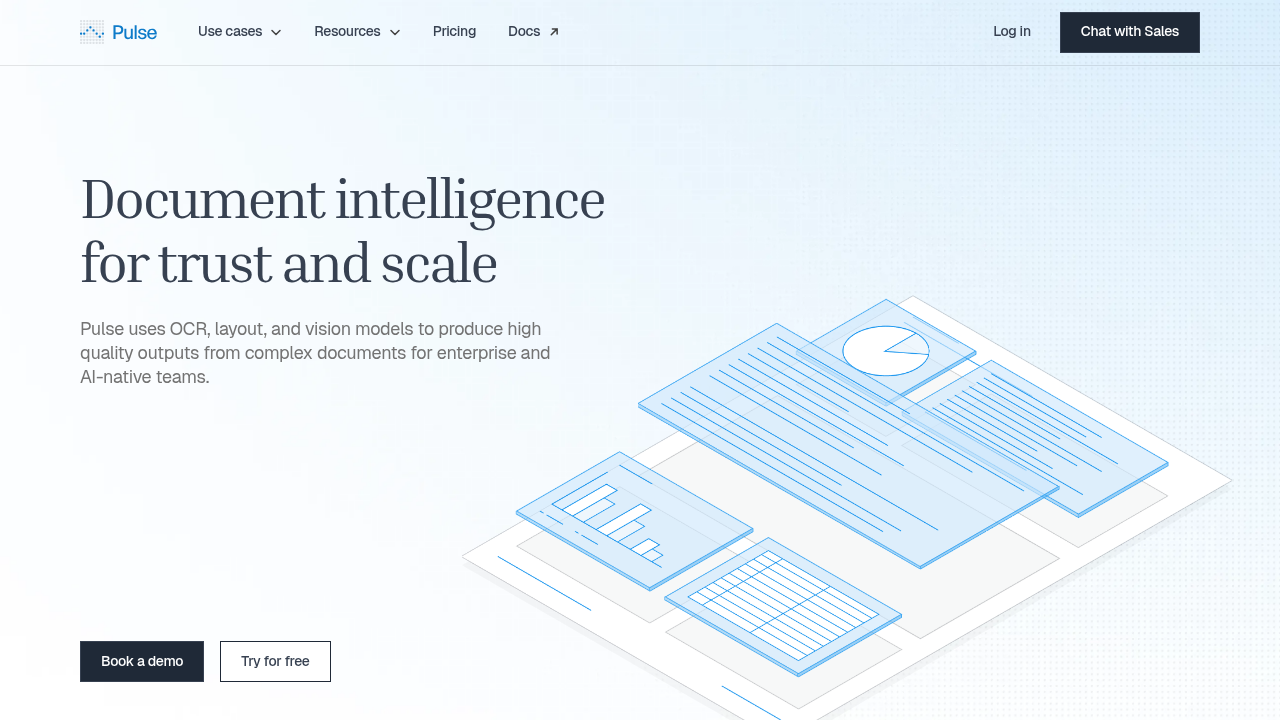
Pulse is a document extraction service that converts PDFs, images, and office documents into Markdown or HTML, with optional structured JSON extraction via schemas. The platform also supports bounding boxes and webhooks for asynchronous job processing. It offers document parsing to Markdown/HTML with schema-based structured extraction, synchronous and asynchronous endpoints with job polling, bounding box coordinates for citations, and multilingual OCR capabilities.
Pulse is well-suited for teams needing production-grade extraction outputs for retrieval-augmented generation (RAG) applications and flexible sync/async processing patterns. Core drawbacks include the lack of workflow orchestration, no built-in evaluation framework for accuracy testing, no schema versioning for safe production changes, and no human-in-the-loop review interface or agent-based optimization.
AnyParser
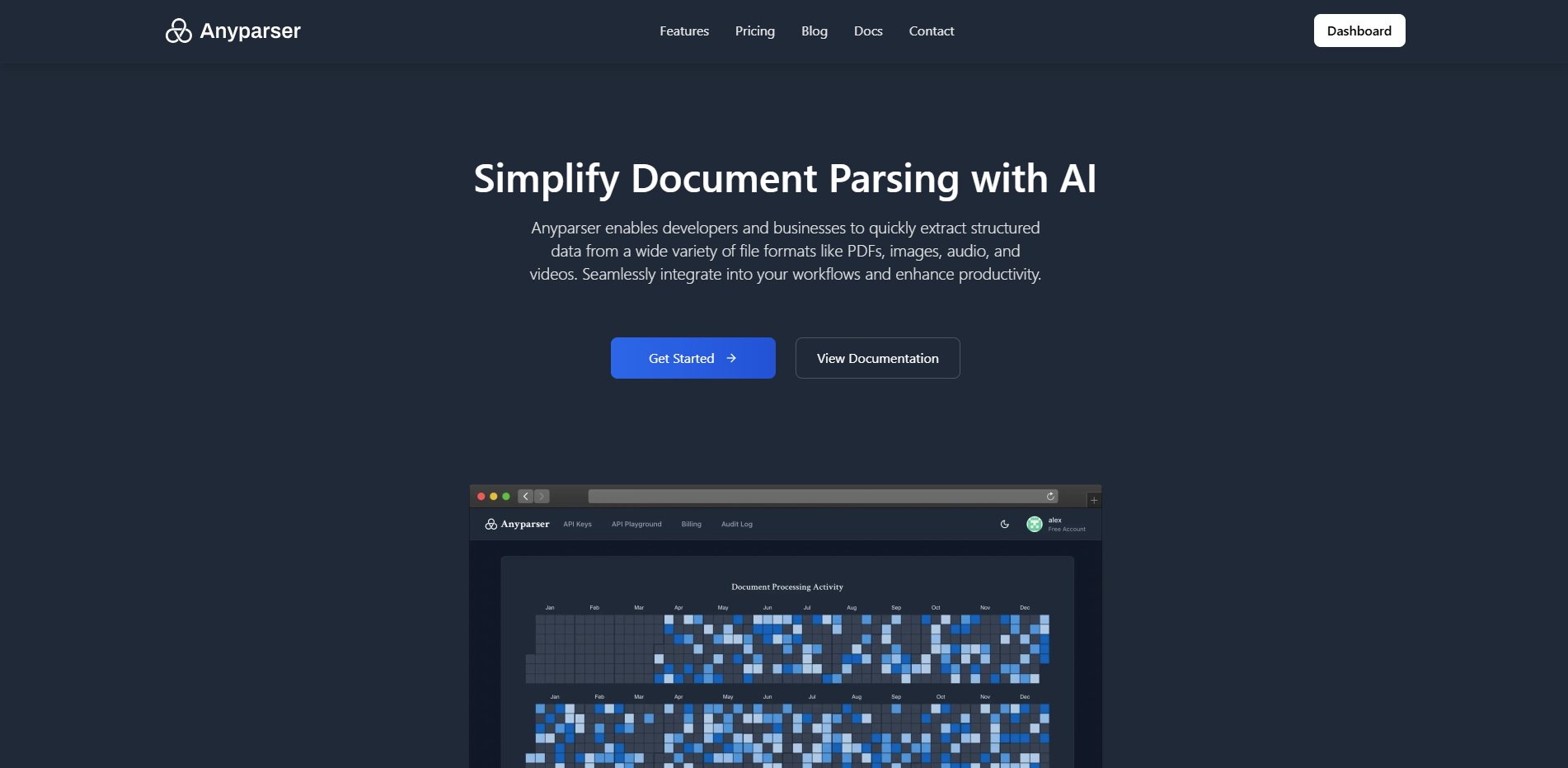
AnyParser is an AI-powered document processing tool developed by CambioML that converts various document formats into content optimized for LLMs and vector databases. It supports multi-format parsing, including PDFs and images, and offers structured extraction designed for RAG and LLM applications, with API access for programmatic processing and a focus on preserving document layout and context.
AnyParser excels for teams building RAG applications who need fast document ingestion with LLM-friendly outputs without requiring complex workflow orchestration. Its key limitations include no dedicated splitting or classification APIs, lack of production features like schema versioning or confidence scoring, no evaluation tools or human review interfaces, and limited infrastructure for managing document processing at scale.
LlamaParse
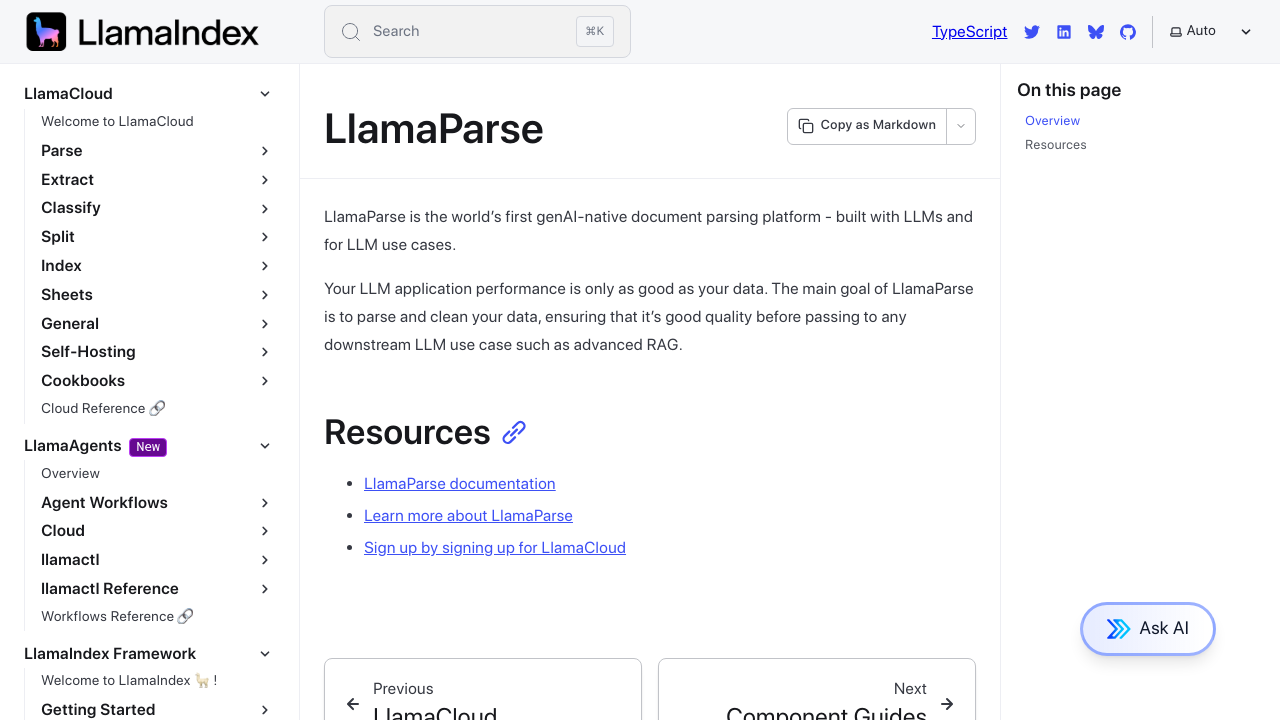
LlamaParse is a GenAI-native document parsing tool developed by LlamaIndex that enhances data quality for LLM-driven applications using natural language parsing instructions, table extraction, and JSON mode. It supports over 10 file types, including PDFs, PowerPoint, Word documents, and ePub books, with a free tier allowing up to 1,000 pages per day.
LlamaParse targets developers building LlamaIndex-based RAG applications who need flexible document parsing with natural language instructions. Notable constraints include being focused on RAG workflows rather than production automation, lacking enterprise features like audit logs and compliance certifications, offering no workflow orchestration or human review capabilities, and providing no evaluation framework to measure extraction accuracy.
Amazon Textract
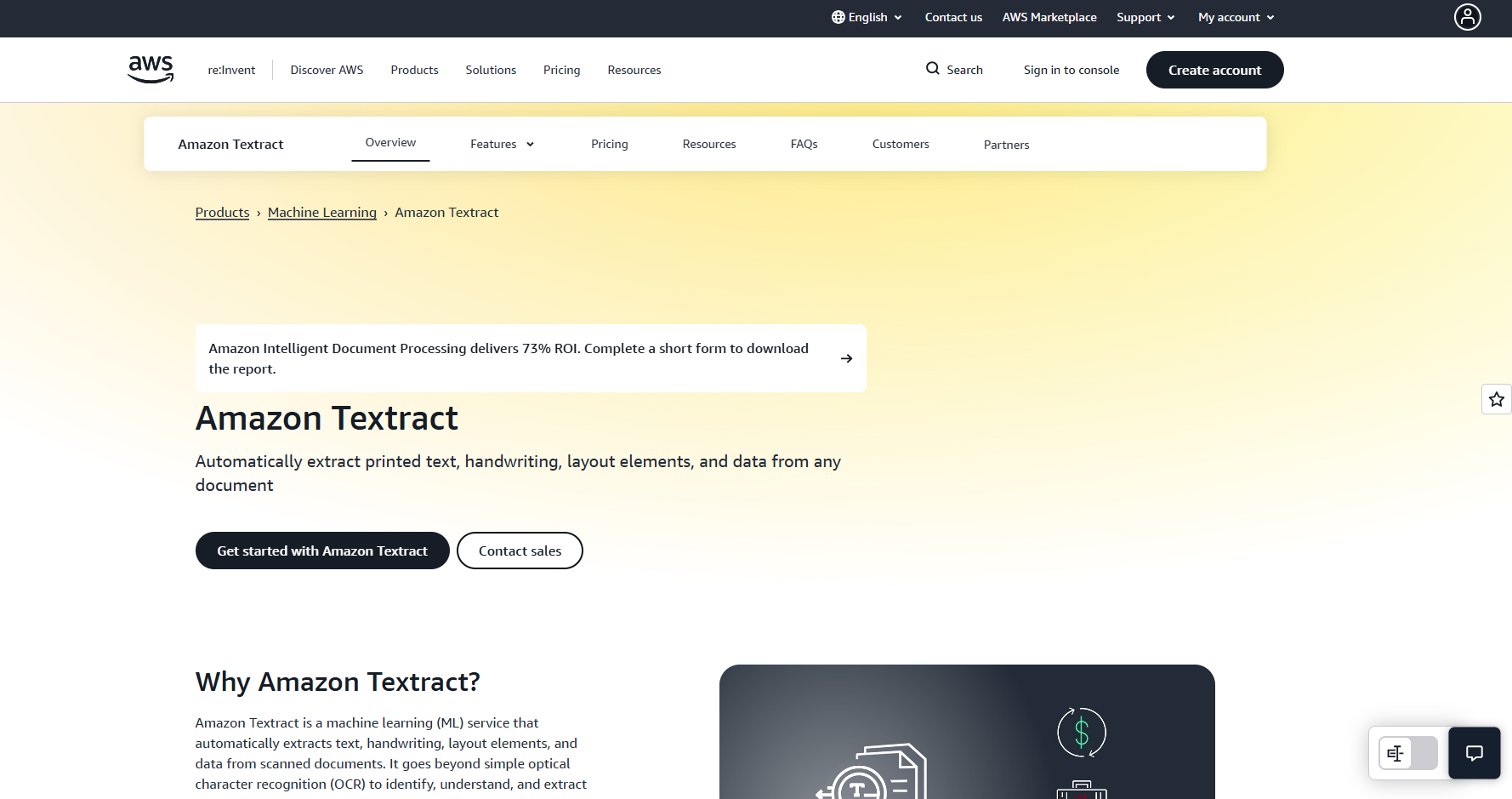
Amazon Textract is AWS’s managed document analysis service that uses machine learning to extract text, forms, and tables from scanned documents. It provides pre-built APIs for text detection, form and table extraction, document analysis, identity document processing, and expense document processing, all integrated with the broader AWS ecosystem.
Textract works well for AWS-native teams needing straightforward document extraction for simple use cases with tight integration into existing AWS infrastructure. Primary limitations include lower accuracy on complex documents compared to vision-based approaches, rigid pre-built models with limited customization, and no agentic optimization or automated schema tuning capabilities.
Feature Comparison: Reducto vs Top Alternatives
The table below compares core capabilities across Reducto and leading alternatives. Teams evaluating document processing solutions should assess which features align with their production requirements.
Workflow Orchestration
| Feature | Reducto | Extend | Pulse | AnyParser | LlamaParse | Amazon Textract |
|---|---|---|---|---|---|---|
| Multiple Performance Modes | No | Yes | No | No | No | No |
| Schema Versioning | No | Yes | No | No | No | No |
| Evaluation Framework | No | Yes | No | No | No | No |
| Schema Optimization Agent | No | Yes | No | No | No | No |
| Agentic Confidence Scoring | No | Yes | No | No | No | No |
| Human-in-the-Loop Review | No | Yes | No | No | No | No |
| Document Classification API | No | Yes | No | No | No | No |
Why Extend is the Best Reducto Alternative
Reducto serves teams well when they need an accurate OCR API with VLM capabilities for document parsing. However, organizations building production-grade document pipelines need infrastructure beyond extraction accuracy alone.
Extend is the complete document processing toolkit comprised of the most accurate parsing, extraction, and splitting APIs to ship your hardest use cases in minutes, not months. Multiple performance modes let teams optimize each workflow independently, choosing fast parsing for real-time applications or cost-optimized processing for high-volume batch jobs. Schema versioning allows safe evolution of extraction schemas without breaking production systems.
The Composer AI agent automatically experiments with prompt and schema variants, achieving 99%+ accuracy in minutes rather than requiring weeks of manual configuration. The evaluation framework provides accuracy reports with custom scoring, while the human-in-the-loop review UI creates continuous improvement loops that refine results over time.
Teams shipping hard document use cases need more than parsing APIs. They need the orchestration, quality control, and optimization infrastructure that Extend's suite of models, infrastructure, and tooling delivers.
Final Thoughts on Building Production Document Workflows
Reducto serves teams well when parsing is the primary requirement, but production systems need surrounding infrastructure. If your workflows demand schema versioning, automated optimization, or integrated quality control, checking out Reducto alternatives makes sense. Extend delivers the complete document processing toolkit with agents that handle optimization, evaluation, and continuous improvement automatically.
Get in touch to see how Extend processes your specific documents.
FAQ
When should you consider moving away from Reducto?
Teams should evaluate alternatives when they need production features beyond parsing APIs—schema versioning for safe schema changes, evaluation frameworks to benchmark accuracy, human-in-the-loop review systems, or workflow orchestration to chain processing steps. If document workflows require multiple performance modes for different use cases or automated optimization to improve accuracy without manual tuning, solutions designed for complete document pipelines become necessary.
What features should you prioritize when comparing document processing alternatives?
Prioritize infrastructure that supports production workflows: multiple performance modes to optimize latency versus cost independently, native schema versioning to evolve extraction schemas safely, evaluation frameworks with accuracy reports against ground truth data, and human review interfaces for quality control. Teams building mission-critical pipelines also need workflow orchestration, confidence scoring for automated routing, and continuous improvement loops.
How does Extend's agentic optimization work?
Extend's Composer AI agent automatically experiments with prompt and schema variants to maximize extraction accuracy. It achieves 99%+ accuracy in minutes by testing different configurations against evaluation data, eliminating weeks of manual tuning that other solutions require. The agent continuously refines extraction logic using feedback loops, improving performance over time without manual reconfiguration.
Can you run different performance modes for different document workflows?
Yes, Extend offers fast parsing, extraction, and splitting modes for latency-sensitive real-time workflows, plus cost-optimized modes for high-volume batch operations. Teams can choose the appropriate performance tier for each workflow independently—processing user-uploaded documents with fast mode while running nightly backfills with cost-optimized mode. Most alternatives offer only a single processing mode regardless of use case requirements.