Every patient workflow automation vendor demos scheduling, reminders, and billing submission using clean sample data. But when you test them on actual patient charts (800 pages of handwritten consult notes, scanned CMS-1500 forms, and prior authorization checkboxes across three payer formats), most systems break down. Document processing must handle real-world medical records before automation can route extracted data into an EHR.
TLDR:
- Automate patient workflows to reclaim time: physicians spend 26.6% on documentation vs 27.5% on care
- Prior authorization automation cuts approval times from 5 days to under 24 hours, preventing delays
- Start with high-volume tasks like insurance verification and intake for immediate ROI
- AI document processing parses handwritten notes, CMS-1500 forms, and 1,000+ page patient charts
- Extend handles dense medical records, extracting diagnosis codes and clinical evidence for EHR systems
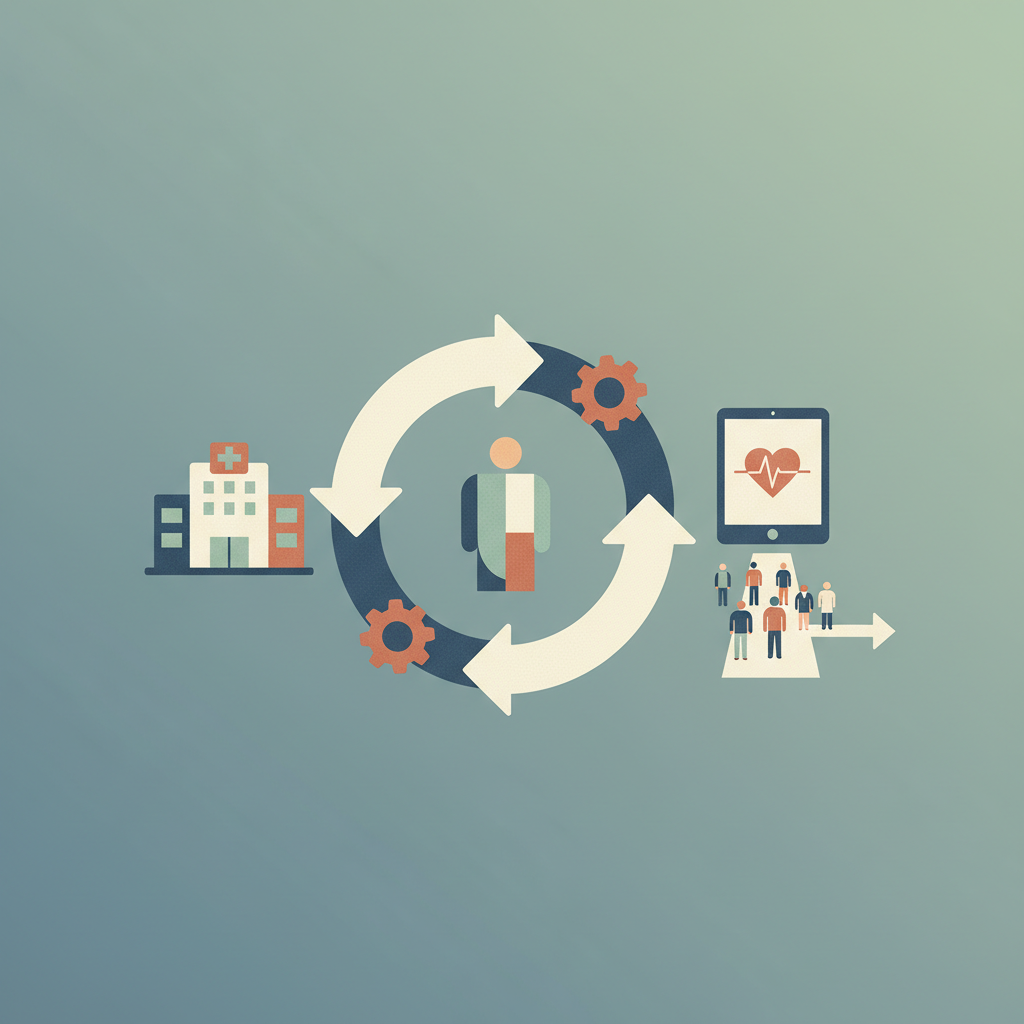
What Patient Workflow Automation Is and Why It Matters Now
Patient workflow automation uses software and AI to handle repetitive administrative and clinical tasks across the patient journey. This includes appointment scheduling, intake forms, insurance verification, documentation processing, and billing.
The need for automation has reached a breaking point. Administrative costs now exceed 40% of total hospital expenses, with insurance verification and documentation overhead driving most of this spending. Healthcare staff lose hours daily to tasks that automation could handle. Physicians spend 26.6% of their time on documentation versus 27.5% on direct patient care. This creates capacity constraints that reduce patient access.
The stakes go beyond lost time and money. Prior authorization delays caused serious adverse events in 29% of cases, including hospitalization, disability, and death. When administrative tasks consume resources that should go to patient care, the consequences affect clinical outcomes.
Common Patient Workflow Automation Use Cases
Automation opportunities exist at every stage of the patient journey. Pre-visit activities include appointment scheduling, insurance verification, and digital intake forms. During visits, automation handles clinical documentation, consent forms, and real-time eligibility checks. Post-visit workflows cover discharge instructions, prescription routing, and follow-up reminders.
| Workflow Use Case | Key Benefits | Approximate Time Savings | Implementation Complexity |
|---|---|---|---|
| Appointment Scheduling | Reduced no-shows, optimized provider calendars | 2-3 hours per day per staff | Low |
| Patient Intake & Registration | Eliminated duplicate entry, real-time validation | 5-7 minutes per patient | Low-Medium |
| Insurance Verification | Real-time eligibility checks, reduced denials | 10-15 minutes per patient | Medium |
| Prior Authorization | Approval time reduced from 5 days to <24 hours | 30-45 minutes per request | Medium-High |
| Clinical Documentation | Reduced burnout, improved patient engagement | 1-2 hours per physician per day | Medium |
| Claims Processing | Lower denial rates, faster reimbursement | 20-30 minutes per claim | Medium-High |
| Lab Results Routing | Faster diagnosis, reduced manual errors | 5-10 minutes per result | Low-Medium |
| Post-Visit Follow-Up | Reduced readmissions, improved adherence | 3-5 minutes per patient | Low |
Appointment Scheduling and Patient Access Optimization
Automated scheduling systems analyze historical data to predict appointment duration, no-show risk, and optimal time slots. The systems consider patient preferences and provider availability, reducing overbooking while maximizing calendar utilization.
Text and email reminders sent at strategic intervals before appointments cut no-show rates.
Patient Intake and Registration Automation
Digital intake forms pre-populate patient information across systems before visits begin. Patients complete registration through portals that verify insurance eligibility in real time and flag missing information. This removes duplicate entry of demographics, insurance details, and medical history.
Prior Authorization and Insurance Verification
Automated prior authorization systems parse clinical notes and patient records to extract required criteria, match them against payer requirements, and submit authorization requests without manual data entry. Document processing APIs extract diagnoses, procedure codes, and supporting clinical evidence from unstructured medical records. The systems then automatically populate payer-specific authorization forms. Real-time insurance verification APIs check eligibility, coverage limitations, and authorization status at registration instead of finding out about denials weeks later.
SamaCare, which has spent 7.5 years building the largest provider network in the U.S. for prior authorization, shipped a clinical document autofill feature on Extend in just 3 weeks. The platform uses Extend's classify, parse, and extract APIs to handle handwritten clinical notes, signatures, and payer-specific checkbox forms across the full PA workflow. Extend now processes nearly 99% of SamaCare's document volume, more than 500,000 pages per month, at 98% accuracy. A majority of practices on the platform use the feature daily.
Clinical Documentation and Chart Processing
Clinical documentation automation converts unstructured notes, patient charts, and voice-recorded summaries into structured EHR entries. Ambient documentation tools capture provider-patient conversations and generate visit summaries. This frees clinicians from keyboard work during appointments.
Processing patient charts presents technical challenges when records span hundreds or thousands of pages. Document processing systems must parse dense layouts like progress notes, lab reports, and medication lists across lengthy files.
Flatiron Health's work on NGS report extraction shows why standard approaches break on complex clinical documents. Flatiron tracks outcomes for more than 5 million cancer patients and spent years trying to pull structured biomarker data from next-generation sequencing reports. A single NGS report can contain hundreds of genes tested across multiple methods, variant codes in HGVS notation, and result types that shift by biomarker and testing lab. Hand-coded OCR rules and fine-tuned NLP models both fell short from 2018 through 2023. In 2024, Flatiron ran a proof-of-concept with Extend and replicated 6 months of prior extraction work in roughly 2 weeks with comparable accuracy. The partnership has since expanded to scale NGS extraction across Flatiron's full patient network of 5 million people with cancer.
Reducing documentation time directly cuts burnout. Less time on data entry means more attention to patients during visits.
Claims Processing and Revenue Cycle Automation
Automated claims systems extract billing codes, diagnoses, and service details from clinical documentation. The systems then submit claims to payers without manual data entry. This reduces reimbursement delays and improves cash flow.
Lab Results and Diagnostic Workflow Automation
Automated lab workflows route test orders from EHR systems to diagnostic labs, match incoming results to the correct patient records, and alert providers when results require immediate action. Critical result notification rules flag abnormal values and route alerts to on-call providers based on urgency thresholds. Faster result delivery shortens diagnosis timelines and reduces manual entry errors that delay treatment decisions.
Post-Visit Follow-Up and Care Coordination
Automated post-visit workflows send discharge instructions, medication reminders, and care plan follow-ups through patient portals, text messages, and emails. The content adapts based on appointment type, diagnosis, and prescribed treatments. Care coordination tools route referrals to specialists and track completed consultations.
Implementing Patient Workflow Automation Successfully
Start by automating high-volume, repetitive workflows with clear success metrics. Insurance verification and patient intake deliver immediate ROI by removing duplicate data entry and reducing staff time per patient. Measure success through time saved per transaction, error rates, and staff capacity freed for higher-value work.
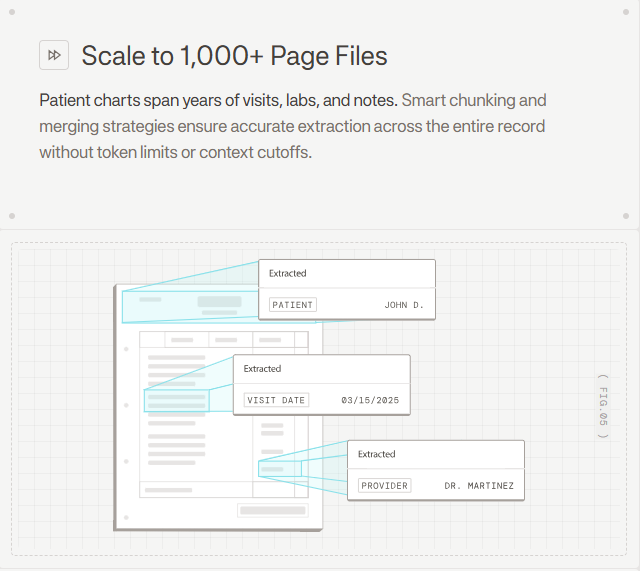
The foundation of workflow automation is document processing. AI solves healthcare's core document problem: turning unstructured records into usable data. Patient charts mix handwritten notes, scanned forms, multi-page lab reports, and records from different systems. Document processing parses CMS-1500 forms, Explanation of Benefits tables, physician handwriting, and prior authorization checkboxes. Smart chunking handles 1,000+ page charts without losing context.
Overcoming Common Implementation Challenges
Integration complexity slows projects when vendors need custom APIs for each EHR system. Solutions with pre-built connectors to Epic, Cerner, and Athena reduce dependencies. Teams can automate prior authorizations without deep EHR customization.
Staff resistance increases when automation changes workflows without user input. Involving front-desk staff, nurses, and billing teams during vendor evaluation improves adoption, especially when automation removes their repetitive tasks.
Data security requires HIPAA compliance, SOC2 certification, and self-hosted deployment options for sensitive documents. Review audit logging, encryption standards, and access controls during vendor selection to prevent regulatory delays.
How Extend Powers Healthcare Document Processing
Extend is the complete document processing toolkit made up of the most accurate parsing, extraction, and splitting APIs to ship your hardest use cases in minutes, not months. Healthcare teams process millions of pages daily using Extend's suite of models, infrastructure, and tooling to handle their most complex documents and optimize performance at scale.
Healthcare organizations choose Extend for mission-critical document processing because it handles the dense, messy layouts that break standard OCR systems. The system parses CMS-1500 forms, Explanation of Benefits tables with nested data across hundreds of rows, physician handwriting in clinical notes, and prior authorization checkboxes across payer-specific formats. Smart chunking processes patient charts exceeding 1,000 pages without losing context or hitting token limits.
Extend's vision AI and LLMs extract diagnosis codes, procedure details, and clinical evidence from unstructured medical records. The system automatically populates EHR fields and payer authorization forms. The API supports 35+ file types and 100+ languages through one endpoint, handling scanned PDFs, images of forms, multi-page documents, signatures, and handwritten notes in a single system.
Teams deploy processing in production workflows within days using pre-trained models and templates. Performance modes toggle between speed, cost, or accuracy based on workflow requirements. Real-time extraction handles receipt-style forms in milliseconds for patient intake. Precision mode processes complex prior authorization packets with 95-99%+ accuracy.
Extend maintains SOC2, HIPAA, and GDPR compliance with self-hosted deployment options for sensitive patient data. The toolkit includes evaluation tools, confidence scoring, and human-in-the-loop review interfaces to catch errors before they reach production systems. Organizations processing high volumes of medical records use Extend to turn documents into structured data that drives faster approvals, reduced administrative overhead, and improved patient access.
Final Thoughts on Patient Workflow Automation in Healthcare
The right automation targets the biggest time drains without forcing system replacements. Workflow automation handles intake forms, prior authorizations, and documentation processing while existing EHR systems continue running. Test one workflow, track the hours saved, and scale the approach across other administrative tasks as results prove out.
FAQ
How long does it take to implement patient workflow automation?
Start with single high-volume workflows like insurance verification or patient intake to see results within weeks. Pilot projects that test automation on real documents before full deployment minimize integration delays and staff resistance.
What documents can automation handle in healthcare workflows?
Automation processes unstructured medical records including CMS-1500 forms, Explanation of Benefits tables with nested data, handwritten physician notes, prior authorization checkboxes, and patient charts spanning 1,000+ pages. Document processing APIs extract diagnosis codes, procedure details, and clinical evidence from mixed-format files that combine typed reports, scanned forms, and handwriting.
Why do prior authorization delays cause patient harm?
Prior authorization delays caused serious adverse events in 29% of cases, including hospitalization, disability, and death. Patients wait for treatment approvals while conditions worsen. Automation cuts approval times from 5 days to under 24 hours by extracting clinical criteria from records and auto-populating payer-specific authorization forms without manual data entry.
When should healthcare organizations focus on documentation automation over other workflows?
Focus on clinical documentation automation when physicians spend more time on charts than patients (currently 26.6% on documentation versus 27.5% on direct care). Ambient documentation tools that capture conversations and generate visit summaries free clinicians from keyboards during appointments. This directly reduces burnout while improving patient engagement.
Can automated claims processing reduce denial rates?
Automated claims submission reduces denial rates by validating billing codes, diagnoses, and modifiers against payer rules before transmission. Systems flag missing documentation, incorrect code pairings, and eligibility mismatches that would trigger rejections. This compresses days in accounts receivable and improves cash flow without changing payer processing times.