Processing 500 leases manually takes your team 125 to 250 hours. That assumes zero mistakes on rent amounts or critical dates. When you process leases automatically, the same workload drops to 2-4 hours while improving accuracy on fields that matter most. Document ingestion handles scanned PDFs and multi-page bundles. Extraction APIs pull structured data from unstructured text. Signature detection verifies execution without touching a single document. This guide covers the technical architecture behind automated lease processing and deployment across your portfolio.
TLDR:
- AI extracts lease data from any format in minutes, cutting the 40-day average processing time.
- Automated signature detection and critical date parsing prevent $100K+ annual losses from errors.
- Vision models handle scanned PDFs, handwritten amendments, and multi-page bundles without templates.
- Extend processes 1,000+ page lease portfolios with smart chunking and automatic document splitting.
Understanding Lease Automation
Lease automation uses AI and software to handle end-to-end lease processing without manual data entry. In 2026, systems convert PDFs, scanned images, and multi-page agreements into structured data that feeds property management systems and business workflows.
Document processing APIs parse text and tables. Signature detection models verify executed agreements. Workflow orchestration routes documents based on type and content. These systems extract tenant names, rent amounts, lease terms, and critical dates. Lease processing moves from a multi-day task to a minutes-long operation.
The Business Case for Automating Lease Processing
Manual lease processing creates costs that scale with portfolio size. Leases now take 40 days on average - double the 20-day timeline from mid-2021. Each vacancy day means lost rent and higher carrying costs.
Data entry mistakes create financial risk. Over 20% of operators lose more than $100,000 yearly from lease administration errors. Manual review misses parking fees, pet rent, and utility reimbursements. These gaps compound over time.
Processing teams spend hours on extraction and validation instead of tenant communication. Automation handles document ingestion in minutes. Real estate teams can focus on leasing velocity.
| Processing Method | Time for 500 Leases | Field-Level Accuracy | Critical Date Detection | Signature Verification | Annual Error Cost |
|---|---|---|---|---|---|
| Manual Data Entry | 125-250 hours | 80-95% (varies by operator experience) | Manual review of each clause, prone to missed notice periods | Page-by-page visual inspection across multi-page agreements | $100K+ in 20% of portfolios from missed fees and renewal deadlines |
| Automated Processing with Extend | 2-4 hours | 95-99%+ on core fields (rent, dates, tenant data) | Automated extraction of renewal notices, escalation triggers, option windows | Vision models scan every page for wet signatures, digital signatures, initials | Near-zero error rate with validation workflows and confidence scoring |
Key Components of an Automated Lease Processing System
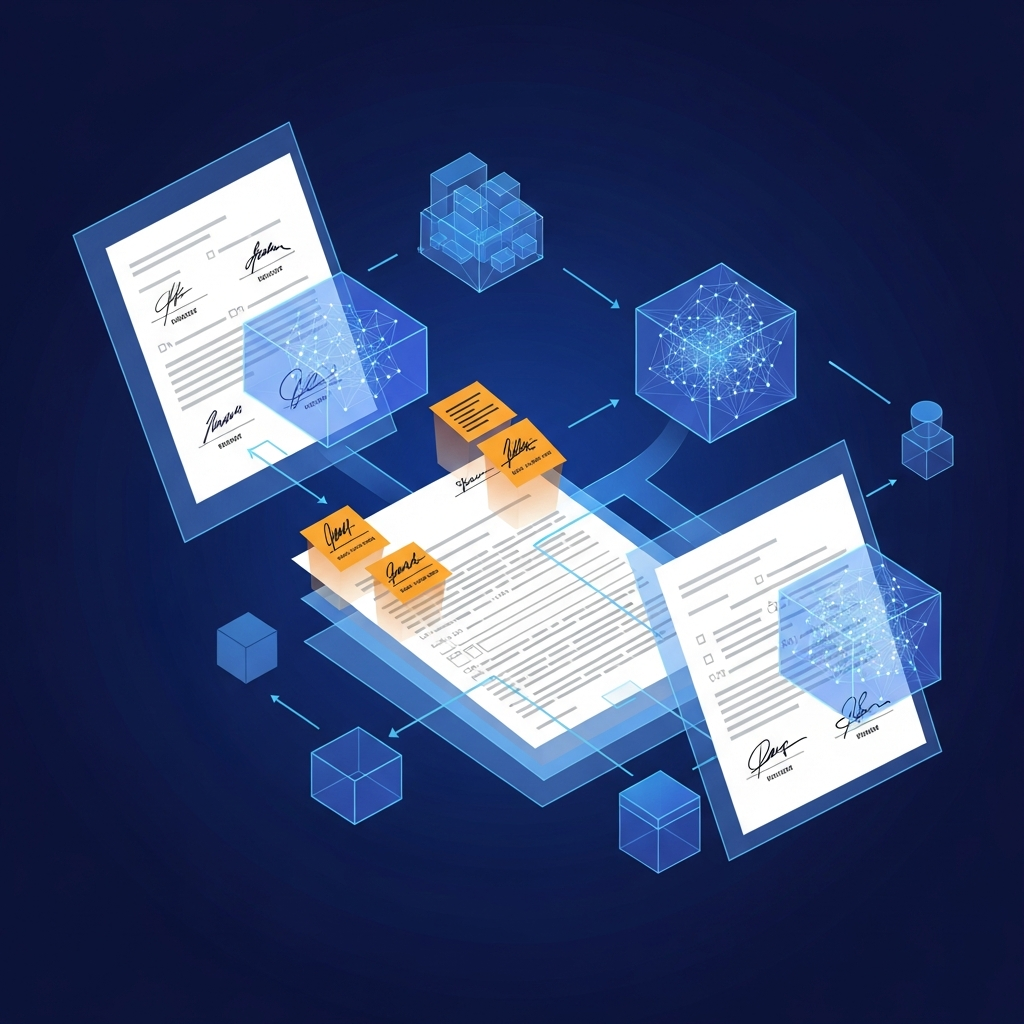
Lease processing moves through five technical stages: document ingestion, data extraction, classification, workflow orchestration, and validation.
Document ingestion APIs accept PDFs, images, and scanned files across any format. These APIs handle multi-page lease bundles. They split combined documents into individual agreements while preserving attachments like addendums and disclosures. Data extraction pulls structured fields from unstructured text. LLMs parse tenant information, rent schedules, lease terms, security deposits, and renewal clauses. Vision models handle dense tables and detect form fields that store payment breakdowns and fee structures.
Classification identifies document variants across residential, commercial, and industrial leases. Signature detection verifies execution status before processing terms downstream. Workflow orchestration routes documents based on confidence scores. Systems flag low-quality scans or incomplete agreements for review. Validation cross-checks extracted data against business rules. This catches missing fields or conflicting dates before records enter property management databases.
Processing Workflows for Different Lease Types
Residential leases follow repeatable patterns. These agreements contain tenant names, unit numbers, monthly rent, security deposits, lease dates, and pet policies. Automated workflows extract these fields, validate rent calculations, and flag missing addendums like lead paint disclosures.
Commercial leases require handling complex financial terms and negotiated clauses. Workflows parse percentage rent formulas, CAM reconciliations, tenant improvement allowances, and exclusive use provisions. Extraction schemas adapt to multi-tenant properties. Each lease may have unique terms.
Renewal processing compares existing lease terms against new agreements. Workflows detect changes in rent, lease duration, or tenant obligations. Amendment handling identifies which clauses changed. Systems extract updated terms and merge revisions into the source lease record.
Critical Dates and Compliance Tracking
Automated extraction identifies critical dates embedded in lease clauses. This includes renewal notices, rent escalation triggers, option exercise windows, and termination deadlines. These dates feed calendaring systems that alert teams weeks before action windows close.
Missing a renewal notice deadline can force month-to-month terms or automatic renewals at unfavorable rates. Extraction workflows parse notice periods written as "90 days prior to lease expiration" or "on or before December 31, 2026." Systems convert relative and absolute date language into calendar entries.
Compliance tracking monitors state-specific requirements like security deposit return timelines and inspection notice periods.
Integration with Property Management Systems
API connections push extracted lease data into property management software like Yardi, RealPage, or Buildium through REST endpoints. JSON payloads map extracted fields directly to database schemas. This removes manual data entry.
Bi-directional sync maintains record accuracy across systems. Webhooks trigger validation checks when lease terms change. Discrepancy alerts route back to property teams through existing dashboards.
Automated document processing handles ingestion and extraction upstream. It passes structured data to property management software for accounting and reporting. Error handling routes low-confidence extractions to review queues before entering production databases.
Implementation Best Practices
Start with high-volume lease types in the portfolio. Residential leases or standard commercial agreements provide consistent formats. Teams can validate accuracy quickly and build confidence before tackling complex document variants.
Set baseline accuracy targets before processing production documents. Run test batches through extraction workflows using a PDF classification API. Measure field-level accuracy against manual review. Aim for 95%+ accuracy on core fields like rent amounts and lease dates before scaling volume.
Train property teams on review queues and confidence scoring. Staff should understand which extractions require verification and how to correct errors through feedback interfaces.
Build feedback loops that capture corrections and route them back to extraction models. Document processing systems improve when teams validate outputs and flag errors.
Security and Compliance Considerations
Lease documents contain sensitive financial information and personally identifiable data subject to privacy laws. Automated processing systems need encryption at rest and in transit. Access controls must limit document visibility to authorized users.
Document retention policies must align with state and federal requirements. Most jurisdictions require lease records for 3-7 years after termination. Processing systems should timestamp ingestion, extraction, and modification events. These create audit trails for regulatory reviews and legal disputes.
Fair housing compliance means extraction workflows can't introduce bias into tenant screening or lease approval. Systems should log which data feeds decision workflows. They must maintain records showing consistent processing across protected classes.
How Extend Lets Real Estate Teams Process Leases Automatically
Extend handles lease processing through specialized document APIs built for real estate workflows. The extraction system parses residential and commercial leases regardless of format. It converts multi-page agreements into structured data without templates or training.
Vision models detect signature fields across every page. They identify executed agreements and track which parties signed. This works on scanned PDFs, digital documents, and handwritten leases without configuration changes.
Smart chunking processes lease bundles exceeding 1,000 pages while maintaining context across sections. The splitting API separates combined documents like PSAs with attachments. It routes addendums and disclosures to the correct lease records.
Teams toggle between performance modes based on workload. Real-time processing handles renewals during business hours, while cost-optimized batch jobs extract historical lease portfolios overnight.
Final Thoughts on Processing Leases With Automation
Automated lease processing removes the bottleneck between document arrival and portfolio data availability. Vision models and extraction APIs convert weeks of manual work into minutes of compute time while maintaining accuracy above manual baselines. Real estate teams gain immediate access to structured lease data for financial reporting, compliance tracking, and portfolio analysis. The systems outlined here handle residential and commercial agreements at scale without templates or custom training. Teams that automate lease ingestion reduce vacancy costs, eliminate revenue leakage from missed fees, and free processing staff to focus on tenant relationships instead of data entry.
We built Extend to handle exactly these kinds of document workflows. Book a call with our team to see how our extraction APIs work on your lease portfolio.
FAQ
How long does it take to implement automated lease processing?
Real estate teams can validate extraction accuracy on test batches within days. Production deployment typically completes in 1-2 weeks depending on lease volume and integration requirements.
What accuracy rates should teams expect from AI lease extraction?
Modern document processing APIs achieve 95-99%+ field-level accuracy on core lease data like rent amounts, dates, and tenant information. They match or exceed manual data entry performance while processing documents in minutes instead of hours.
Can automated systems handle both residential and commercial leases?
Yes. Vision models and LLMs parse both lease types without templates. They adapt to residential agreements with standard fields and commercial leases with complex financial terms, negotiated clauses, and unique tenant provisions.
How does signature detection work on scanned lease documents?
Vision models scan every page to locate wet signatures, digital signatures, and initials regardless of document quality or format. They track which parties signed and where. This determines execution status before processing lease terms.
What happens when the extraction system encounters low-confidence data?
Workflow orchestration routes documents with low confidence scores to review queues. Property teams validate extractions through feedback interfaces. Corrections feed back to improve model performance over time.